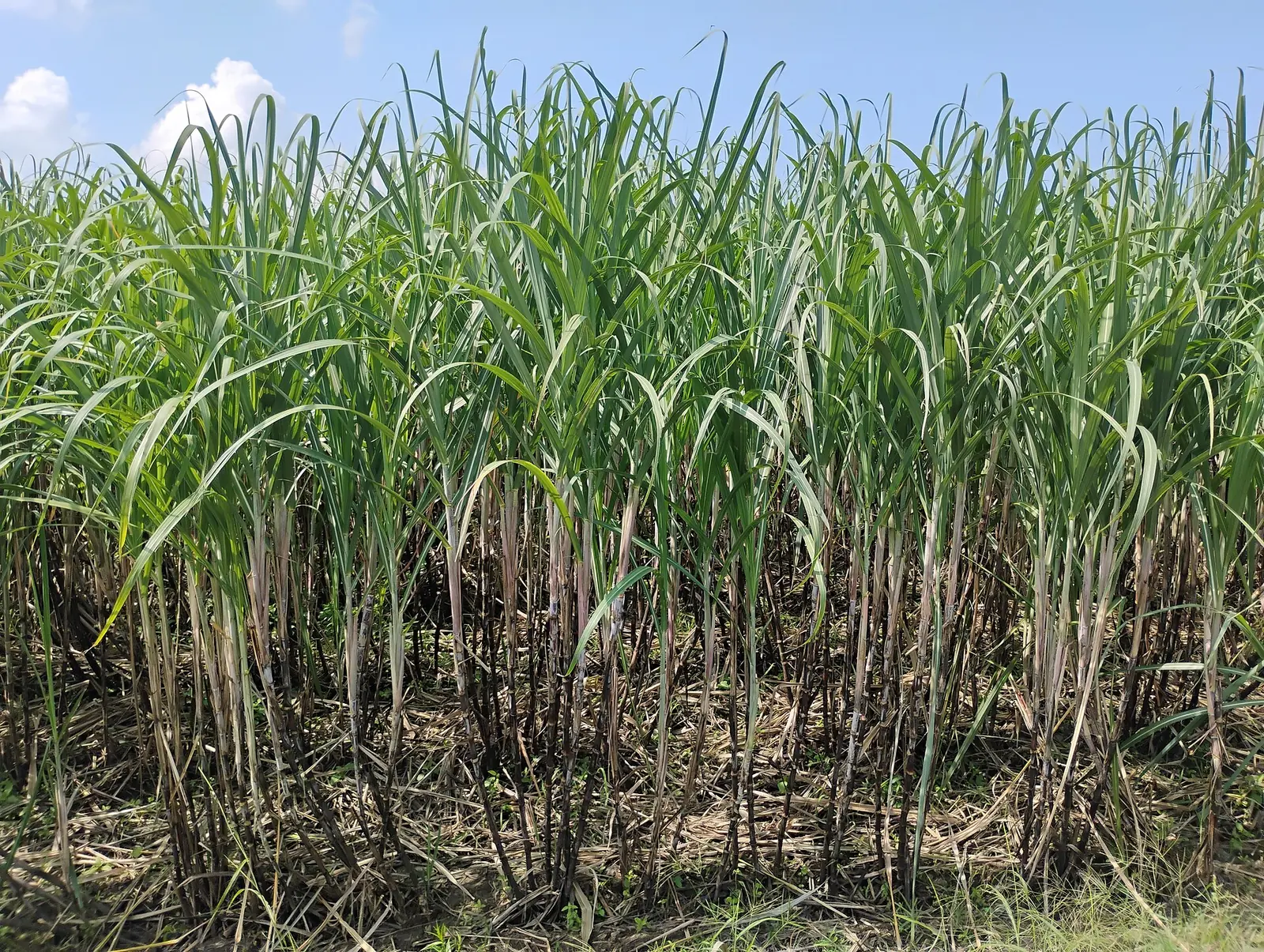
The cane and the priest
How sugar came to Negros
The stone houses of Silay, and the muscovado in a box of piaya, come from the same plant. This is the short history, with a note wherever the sources do not agree.
The stay is at Bukaw, by the Malogo River in Silay.
Drive times on this page are approximate, from Silay City proper, not measured from our gate.
Last checked 27 October 2026.
The houses you can walk past are on Heritage and museums. The festivals that grew out of the hacienda towns are on the festival calendar.
From a few planters to the haciendas
Cane grew in Negros before it made anyone rich. Historian John Larkin notes that Visayan muscovado was already reaching Manila in the 1830s, but he dates commercial sugar on the island to 1844, when the French sugar technician Yves Leopold Germain Gaston settled at Buen Retiro, his estate in Silay. Gaston had come to the Philippines around 1837 to make sugar for Domingo Roxas in Calatagan, Batangas. When that venture failed, he moved to Negros.
By about 1848 the island made about 3,000 piculs, roughly 190 tons, from four planters: Agustín Montilla in Bago, Gaston in Silay, Eusebio Ruiz de Luzuriaga in Bacolod, and a planter known as Tía Sipa in Minuluan, today's Talisay. Sources differ on the year. Larkin dates the figure to 1848. Aguilar places it in the early 1850s.
Sources differ on Gaston's first mill. Larkin writes that he built the first trapiche, a cane mill, and an horno económico, a more efficient furnace for boiling the syrup. The Balay Negrense museum and later press call it a steam-run iron mill, and his family's historians place the furnace still under construction in 1847. Jagor wrote that in 1857 there was not one iron mill on the island, but it is not clear which island he meant. We don't treat any one of these as the only account. Gaston died in 1863 and was buried in Molo, Iloilo. His estate was in Silay. The Gaston house at Hacienda Santa Rosalia in Manapla belongs to later generations of the family, not to that first mill.
The boom came from across the strait. Iloilo was opened to foreign trade by royal order on 29 September 1855, and the British merchant Nicholas Loney arrived as the first British vice-consul in 1856. The year agrees. The day does not, so it is not given here. Loney and other foreign firms advanced credit to planters and imported iron mills and machinery. Historian Alfred McCoy argues the same trade also hollowed out Iloilo's weaving industry, pushing its merchants and capital toward sugar. Families from Molo, Jaro and elsewhere in Panay crossed to Negros, cleared land and built haciendas worked largely by migrant labor.
The Augustinian Recollects took over the parishes of Negros in 1848, and some of their priests pushed planting hard, none more than Fr. Fernando Cuenca in Minuluan.
Silay's golden age ran from the late 1800s into the first decades of the 1900s, when planter families built the town houses that still line its streets. In 1993 the National Historical Institute marked several of them, including the Bernardino-Ysabel Jalandoni and Manuel Severino Hofileña houses, and the NHCP registry lists them together as the Silay National Historical Landmark.
In the early 1900s the hacienda mills gave way to large centrifugal mills called centrals. The Hawaiian-Philippine Company was founded in 1918 and began grinding in Silay on 15 January 1921. Victorias Milling Company, founded on 7 May 1919, started milling in 1921 and refining in 1928. By 1922 western Negros had seventeen sugar factories.
Much of it is still working. Hawaiian-Philippine Company still grinds cane in Silay, keeps 1920s steam locomotives, and makes muscovado in a separate artisan facility. Victorias Milling remains one of the country's largest sugar producers. Farmer cooperatives such as Esperanza's Best in La Carlota are reviving muscovado, and the Sugar Cultural Landscape of Negros and Panay is on UNESCO's tentative World Heritage list.
Sources
- Larkin, John A. Sugar and the Origins of Modern Philippine Society. University of California Press, 1993.
- Aguilar, Filomeno V., Jr. Colonial sugar production in the Spanish Philippines. Journal of Southeast Asian Studies, 2017.
- Formation of a Sugar Region in the Late 19th Century Negros. Southeast Asia: History and Culture, 1982.
- Jagor, Fedor. Travels, quoted in The Former Philippines thru Foreign Eyes (1873).
- National Historical Commission of the Philippines: Port of Iloilo marker (1975); Silay houses marked 1993.
- Balay Negrense and the Gaston family history, for the steam-mill account and the 1847 furnace.
- UNESCO World Heritage Centre, tentative list, Sugar Cultural Landscape of Negros and Panay, ref. 6713.
- TICCIH Philippines, on the Hawaiian-Philippine Company. Philippine News Agency (2019), on Victorias Milling.
Fr. Fernando Cuenca
Fernando Cuenca de San José was born on 30 May 1824 in Paracuellos de la Ribera, Zaragoza, Spain, and became an Augustinian Recollect. The order took charge of the parishes of Negros in 1848. He first served as an assistant in Himamaylan, where he learned Hiligaynon, before being sent to Minuluan.
Sources differ on when he arrived. Recollect historian Ángel Martínez Cuesta gives the first days of January 1850. A 1925 Recollect chronicle, and a later article, say he was parish priest from 1851.
Minuluan was then mostly cogon grassland with a few scattered houses. He gathered settlers into a planned town around a plaza, built its first church and convent, and gave the parish San Nicolás de Tolentino as patron. In 1856 he rode north and northeast, organizing settlements that later grew into Victorias, Manapla, Cadiz, Escalante and Calatrava.
Sources differ on the water-powered mill. Recollect sources credit him with designing, building and spreading a hydraulic cane mill, the molino de agua of Talisay's own history. One Recollect source dates the first to 1873. A newspaper column lists the molino de agua among methods replaced in 1846, which suggests water mills were already in use. We don't publish him as the inventor. The historian Filomeno Aguilar, writing independently, describes him as heavily involved in stimulating and supporting cane growing, including on his own lands. He did not bring sugar to Talisay. Larkin records cane being milled in Minuluan by 1848.
In the mid-1880s, wary of depending on one crop and of competition from beet sugar, he urged planters toward abaca, coffee and root crops.
He also turned his rectory into a kind of hospital, treating patients free of charge with water cures, among them the future Saint Ezekiel Moreno in 1873. During the 1898 revolution, led in the north by his friend Aniceto Lacson, he was left unharmed, though confined to the convent. Recollect accounts say he was the only Recollect who never left the island. He died in Talisay on 28 March 1902, Good Friday. A statue of him has stood at San Sebastian Cathedral in Bacolod since about 1930, and another on Talisay's plaza since 1974.
Most of this detail comes from Recollect writers, drawing on the order's archives in Marcilla, Spain. Aguilar and Larkin are the independent checks. The 5 November story, and the Minulu-an festival that still uses the town's old name, are on the festival calendar.
The church he served is San Nicolas de Tolentino. The festival is Minulu-an.
Sources
- Romanillos, Emmanuel Luis A. A History of the Parish of Talisay City. Recollectio 40-2 (2017). Cites Martínez Cuesta, History of Negros (1980), and Simonena, Father Fernando Cuenca of St. Joseph (1974).
- Romanillos. Augustinian Recollect Legacy to the Church in Negros. Tolle et Lege, 2006.
- Order of Augustinian Recollects, Province of St. Nicholas of Tolentine. Fernando Cuenca (1824–1902), June 2024.
- Talisay City Government. History of Talisay City.
- The 1974 Talisay plaza plaque, quoted in Romanillos 2017.
The river after
Stay at Bukaw
Go out for the morning. Come back while the light is still on the water. River time and the river does not rush are the two essays we mean by that.
Flying in? We can meet you at Bacolod–Silay Airport with a van. Pickup is an extra charge. Write to us and we will arrange it.