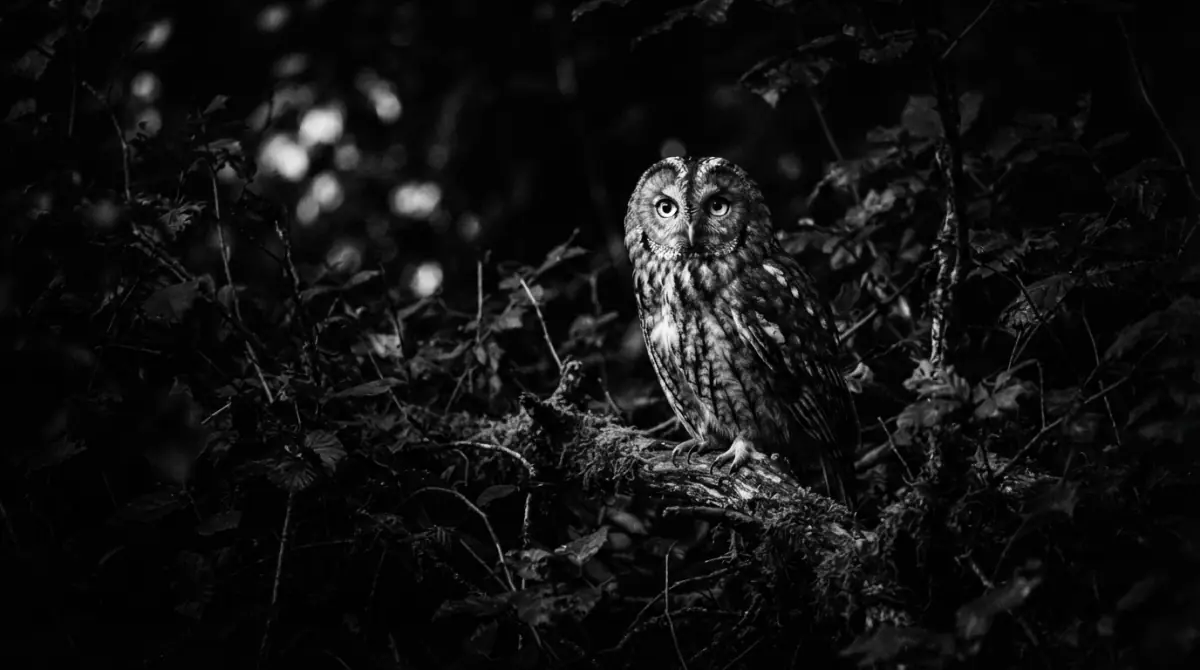
Few animals have inspired as much fascination and symbolism as the owl. With its ability to see in darkness, its remarkable intelligence, and its quiet, watchful nature, the owl has become a powerful symbol across cultures and spiritual traditions.
But the meaning of the owl is not the same everywhere. In some traditions, it represents wisdom, prosperity, and protection. In others, it has been associated with misfortune, death, or the unknown.
Perhaps that contrast is what makes the owl so compelling.
The Owl as a Symbol of Wisdom
In Western culture, the owl is perhaps best known as a symbol of knowledge and wisdom. This association can be traced back to ancient Greece, where the owl was considered sacred to Athena, the goddess of wisdom, reason, and fairness.
Athena is often depicted with an owl by her side. An owl flying over soldiers during battle was even interpreted as a sign that Athena favored them.
The familiar expression “as wise as an owl” reflects how deeply this symbolism has become embedded in Western culture.
Beyond mythology, owls also possess remarkable abilities. Young owls can learn new behaviors, abandon habits that lead to mistakes, and remember new associations. Their ability to observe, adapt, and navigate the darkness makes the owl a natural metaphor for intelligence and awareness.
Different Owls, Different Meanings
Even different types of owls can carry their own symbolism.
The Barn Owl, with its distinctive heart-shaped face, is associated not only with wisdom but also with love.
The Snowy Owl, meanwhile, is often connected with change, transformation, and inner wisdom. Its white coloring can symbolize purity, innocence, light, spirituality, and illumination.
Together, these interpretations reveal something interesting about the owl: wisdom is not simply about knowing more. It can also mean seeing clearly, adapting to change, and understanding what lies beneath the surface.
The Owl in Chinese Culture
The owl carries a very different reputation in some Chinese traditions.
In ancient Chinese texts, owls were sometimes described as unfilial birds because of the belief that they ate their mothers. Their nocturnal nature and distinctive hoot also contributed to the perception of the owl as an ominous creature.
As a result, owls could be interpreted as signs of bad luck, misfortune, or even death.
This contrast with the Western image of the wise owl is a reminder that symbols are shaped by the stories, beliefs, and experiences of the cultures that interpret them.
The same creature can inspire completely different meanings depending on where—and how—it is seen.
British and Welsh Folklore
British folklore also contains fascinating beliefs about owls.
In Welsh tradition, hearing an owl among houses was associated with the belief that an unmarried girl had lost her virginity. Another belief held that if a pregnant woman heard an owl, her child would be blessed.
These traditions demonstrate how the owl became woven into everyday beliefs about family, relationships, birth, and social life.
Rather than having one fixed meaning, the owl became a kind of cultural mirror—reflecting the hopes, fears, and assumptions of the people who encountered it.
The Owl in Hinduism
In Hinduism, the owl has a particularly significant association with Lakshmi, the goddess of wealth, fortune, and prosperity. The owl is regarded as her vahana, or vehicle.
Here, the owl represents more than material wealth.
It can symbolize wisdom, detachment from material desires, and the ability to see through darkness and ignorance. In this interpretation, prosperity is most valuable when it is accompanied by awareness and discernment.
The message is powerful: having abundance is one thing; having the wisdom to use it well is another.
The Owl as a Spiritual Messenger
Across many spiritual traditions, owls are regarded as messengers from the spiritual world.
Their appearance may be interpreted as a sign of guidance, protection, or awareness. Because owls can see in darkness, they are often used metaphorically to represent the ability to see what others cannot.
Seeing an owl can therefore serve as a reminder to look beyond appearances, trust your intuition, and remain open to truths that may not immediately be visible.
Their hoot can also be interpreted symbolically—as a call to listen more closely to your inner voice.
For some traditions, an owl's call may be a warning. For others, it may represent spiritual protection.
The Owl, Death, and Transformation
The owl's connection to nighttime and darkness has also led to associations with death and the afterlife in some cultures.
Yet in many spiritual interpretations, the owl does not necessarily represent literal death. Instead, it represents transition and transformation.
The darkness can symbolize the unknown. The owl's ability to navigate through it becomes a metaphor for moving through uncertain periods of life.
An owl may therefore represent the end of one chapter and the beginning of another—a reminder that transformation often requires us to enter places we cannot yet fully see.
The Owl in the Bible
Owls also appear in the Old Testament of the Bible.
In Leviticus 11:16–18 and Deuteronomy 14:15–17, several birds, including different types of owls, are listed among birds considered unclean and forbidden for the Israelites to eat.
Owls also appear symbolically in Isaiah, where they are associated with desolation, ruin, and judgment. They are described as dwelling in places that were once inhabited but had become deserted.
In Psalm 102:6, the psalmist writes:
I am like a desert owl, like an owl among the ruins.
Here, the owl becomes an image of loneliness and misery, emphasizing the connection between the solitary bird and abandoned places.
These biblical references offer yet another interpretation of the owl—one connected not to wisdom or prosperity, but to solitude, wilderness, and desolation.
Seeing Beyond the Obvious
Perhaps the most universal idea associated with the owl is its ability to see in the dark.
Symbolically, this makes the owl a powerful representation of intuition, insight, and perception.
The owl invites us to look beyond what is immediately obvious. It encourages us to question appearances, notice subtle signs, and pay attention to information that might otherwise be overlooked.
In this sense, the owl can represent the ability to remain calm and observant when circumstances are unclear.
Instead of reacting immediately, we can pause.
We can observe.
We can listen.
And then we can decide.
The Owl as a Guide for Modern Life
The symbolism of the owl remains relevant even in a modern world filled with information and constant stimulation.
The owl spirit animal is often associated with intuition, intelligence, creativity, and awareness. Its message is simple: pay attention.
Observe your surroundings.
Listen to your instincts.
Look for patterns.
Question what appears obvious.
And when you don't have all the answers, learn to become comfortable with uncertainty.
The owl's strength is not simply that it can see in the darkness. It is that it can remain focused while moving through it.
That is a powerful lesson for anyone navigating change, uncertainty, or a new chapter in life.
The Creative Wisdom of the Owl
The owl can also symbolize creativity.
Just as an owl uses its extraordinary vision to navigate the darkness and find opportunities that others cannot see, we can use creativity to discover new ideas, perspectives, and solutions.
Creativity often begins when we are willing to look at a familiar problem from a different angle.
The owl reminds us that there may be more than one way to see reality.
Sometimes, what we need is not more information.
We simply need a different perspective.
What the Owl Can Teach Us
Across cultures, the owl carries many meanings—wisdom, mystery, love, prosperity, intuition, protection, transformation, solitude, and even misfortune.
These meanings may seem contradictory, but together they reveal why the owl has remained such a powerful symbol throughout history.
The owl lives at the boundary between light and darkness.
It is active while much of the world is asleep.
It observes before it acts.
It sees what others cannot.
And perhaps most importantly, it reminds us that darkness does not necessarily mean we are lost.
Sometimes, darkness is simply where we learn to see differently.
The owl invites us to slow down, become more observant, trust our inner wisdom, and remain open to transformation.
To see like an owl is to look beyond the obvious—to find clarity even when the path ahead is not yet fully visible.
Source material: “Owls in different cultures by Richard P. Burgos.”